Fingerspelling is where most beginners stall. You learn the twenty-six letters in a week and then discover that spelling a word at conversational speed is a different skill, and reading someone else's spelling is a third skill harder than both. This post is the set of fixes we give students who are stuck.
If you have not learned the letters yet, start with the alphabet guide and come back.
Park your hand
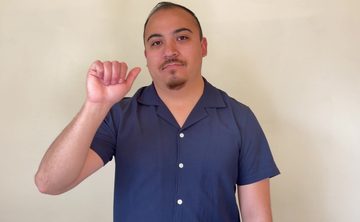
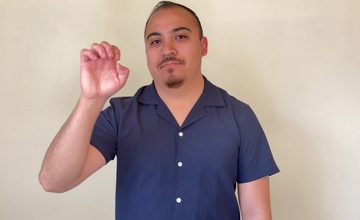
The number one production problem is a bouncing hand. Beginners move the whole hand with every letter, which makes words hard to read and slows you down. Hold your hand at shoulder height, slightly in front of you, and keep the wrist still. Only the fingers move. Imagine your hand is in a small box; the letters happen inside the box.
The letters that look alike at speed, A, S, E, and O, stay distinct when the hand is still and the shapes are crisp.
Mouth the word, not the letters
When you spell C-A-T, your lips say "cat" once, slowly, not "see-ay-tee." This is how fluent signers do it, and it is how a reader understands you: they watch the hand and the mouth together and read the word as a whole shape. Mouthing letters is one of the quickest ways to mark yourself as a beginner, and it genuinely makes you harder to read.
Rhythm over speed
Fast and jerky is unreadable. Steady and medium is readable. Spell at a rhythm you can hold with no pauses between letters and a slight pause between words. Speed comes on its own when the rhythm is consistent. Many beginners who think they are "slow" are actually uneven, which is a different and more fixable problem.
Double letters slide
For a double letter, like the Ls in "hello" or the Ss in "Tess," sign the letter once and then slide it slightly to the side for the second. Do not bounce it twice. Some letters, like double Z, are made with a two-finger Z instead.
Reading: watch shapes, not letters
Reading fingerspelling is the skill that takes longest and matters most. The mistake is trying to catch each letter and assemble the word in your head. By the time you have decoded the third letter, the signer is on the ninth.
Instead, watch the whole hand and the mouth, let the shape of the word land, and guess. Fluent readers do not read letters; they read word shapes, the way you read this sentence without sounding out each letter. The confusable pairs, like M and N, or T and A, resolve themselves from context more often than from the handshape.
Reading: predict from context
If someone has just signed Name and starts spelling, you are reading a name. If they signed Where and then I'm From, you are reading a place. Knowing the category before the word starts cuts the work in half. Use the first letter and the length of the word and let your brain fill in the rest.
Drill the right things
- Your name, address, and city until they are automatic. These are the words you will spell most.
- Common short words that get fingerspelled in ASL rather than signed: many brand names, some food words, and abbreviations like ASL.
- Receptive drills at increasing speed. Watching fingerspelled words and typing what you saw is the single most effective fingerspelling exercise, and it is in the Ziggy app for exactly this reason.
- Spelling what you see. Read signs, labels, and car names aloud with your hand while you walk. Ten minutes a day, quietly, in public, and nobody notices.
When to spell and when to sign
Fingerspelling is for names, places, brands, and words with no established sign. It is not a fallback for every sign you have not learned yet. Beginners who spell everything are exhausting to read and never build vocabulary. If you do not know a sign, ask: How Do You Sign That?. You will learn a sign and have a conversation at the same time.
It gets easier
Reading fingerspelling feels impossible for roughly the first three months and then one day it does not. The switch is your brain moving from letters to shapes. Keep watching real signers, keep doing receptive drills, and keep your own hand parked and your rhythm steady. It comes.