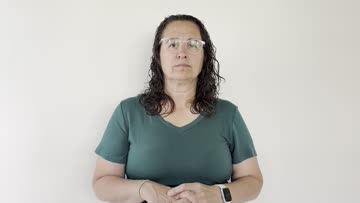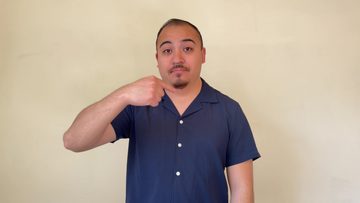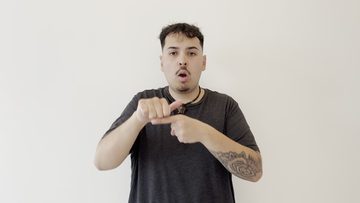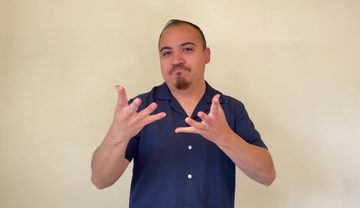
The honest answer is that "learn ASL" means several different things, and each one has a different timeline. Learning enough to greet someone and introduce yourself takes a weekend. Learning enough to hold a slow, friendly conversation takes a few months of daily practice. Becoming fluent, the kind of fluent where you follow a fast group conversation and tell a story with your face and your space, takes years, the same as any language.
Here is what that looks like in practice, with the habits that move you from one stage to the next.
After one week
With fifteen minutes a day, you can learn the alphabet, fingerspell your name without looking at your hand, and sign a basic introduction: Hello, My Name Is, your name, Nice To Meet You. You can say Thank You, Please, Sorry, Yes, and No.
That is not nothing. It is enough to be polite, and politeness is where every relationship starts.
What makes the week work: learn signs in sets that go together, not one at a time. The first signs category is built for exactly this.
After one month
With daily practice, you have roughly 100 to 150 signs: greetings, replies, pronouns, question words, basic feelings, family, food, and time. You can ask How Are You? and understand the answer. You can say I'm Learning ASL and Sign Slow and mean them.
Your fingerspelling is still slow, and reading other people's fingerspelling is slower. That is normal. Reading comes later than producing.
The habit that matters here is receptive practice: watching signs and identifying them before you try to produce them. Recognition drills are the fastest way to grow vocabulary, which is why the app leads with them.
After three months
Around 300 signs. You can hold a short conversation about yourself, your family, your day, and your plans, as long as the other person is patient. You know that ASL puts time first and the question word last, and you are starting to feel the grammar rather than translating in your head.
The plateau most people hit here is facial expression. You know the signs, but your face is flat and your questions do not look like questions. Fixing that takes mirror practice and someone to tell you the truth. See facial expressions in ASL.
After six months
You can follow a slow conversation and participate. You understand that I and ME are the same sign and that HE and SHE are the same sign, and you have stopped looking for English words that do not exist in ASL. Fingerspelling at normal speed is readable, if not always comfortable.
The thing that moves people forward at this stage is not more vocabulary. It is real signing with real people. A Deaf meetup, a class, an online conversation partner, a Deaf coworker who is willing to chat. Even one hour a week with a fluent signer accelerates everything.
After one to two years
Conversational. You follow group conversations, you tell stories with classifiers and role shift, and your face does the grammar without you thinking about it. You have a name sign, probably, given by someone in the community. You still learn new signs every week, and you always will.
Fluency on the level of a native signer takes longer and typically requires immersion. Most hearing adults who sign fluently learned in a program with Deaf teachers, through Deaf family or partners, or by working in the community for years.
What speeds it up
- Daily, not weekly. Fifteen minutes a day beats two hours on Sunday. Signs decay fast without repetition in the first weeks.
- Video, not drawings. Signs are movement. A still picture misses the part that matters. Every sign in our dictionary is a clip for this reason.
- Receptive before productive. Recognize ten signs, then practice producing them. Doing it the other way around is slower.
- Sets, not lists. Learn family together, colors together, question words together. The patterns inside each set do half the memorizing for you.
- Real signers, early. Even a beginner benefits from watching real conversations. Sign language vlogs, Deaf creators, interpreted events.
What slows it down
- Learning signs as English words instead of as ASL. The biggest one.
- Skipping the face. A beginner with great hands and a blank face is harder to understand than a beginner with sloppy hands and the right expression.
- Fingerspelling everything instead of learning signs.
- Stopping after the first plateau, which usually arrives around month two.
The honest summary
A weekend to be polite. A month to be a beginner people enjoy talking to. Six months to be conversational with patient partners. A couple of years to be comfortable. A lifetime to be done, which is true of every language and is the good part.
Start with the alphabet, then greetings, then basic phrases. Fifteen minutes a day.